
Best YouTube Channels to Learn Chinese in 2026: 10 Picks and a 30-Day Plan
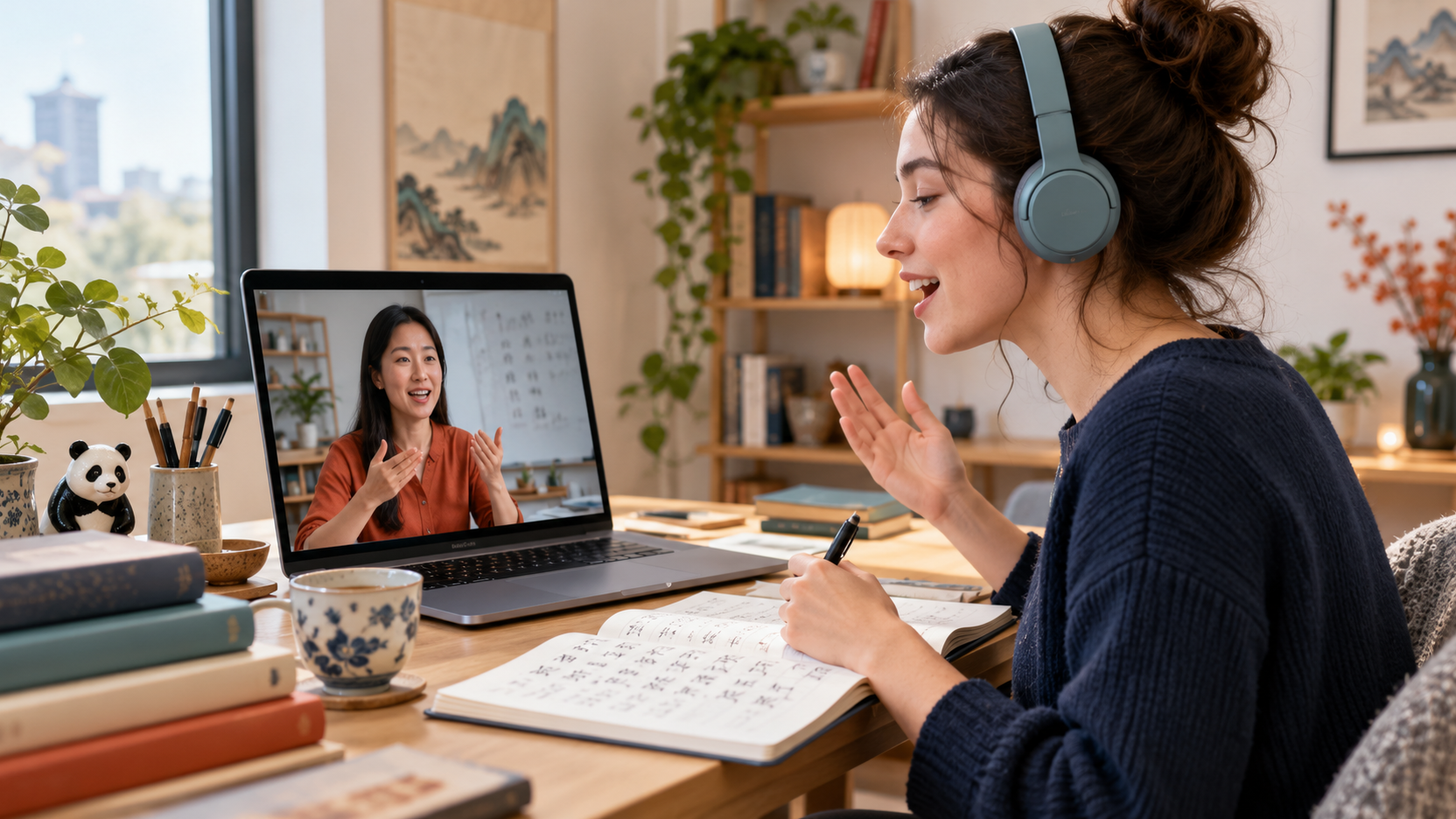
Choosing a YouTube channel to learn Mandarin Chinese sounds easy until you open twenty tabs and discover twenty different teaching styles. One teacher explains tones in English. Another speaks only Mandarin while pointing to drawings. A third interviews strangers on busy streets. All three may be useful—but not necessarily on the same day of your learning journey.
Imagine a beginner who can repeat nǐ hǎo perfectly after a video but cannot recognize the same words in a real conversation. The problem is not a lack of good videos. It is a mismatch between the learning activity and the skill the learner wants to develop. Watching an explanation is different from understanding speech; understanding a sentence is different from producing it without help.
This guide brings together 10 of the best YouTube channels to learn Chinese in 2026, chosen for different purposes rather than popularity alone. The focus is Mandarin Chinese (Putonghua), the variety most commonly taught to international learners. You will find resources for complete beginners, pronunciation, Chinese characters, HSK study, listening comprehension, and natural conversation. More importantly, you will learn how to make YouTube an active learning environment rather than an endless playlist.
Quick answer: Which Chinese YouTube channel should you choose?
There is no single best channel for every learner. If you are starting from zero, try Yoyo Chinese for explanation and Blabla Chinese for contextual listening. If tones remain confusing, turn to Grace Mandarin Chinese. If you are following an HSK-oriented curriculum, Chinese Zero to Hero is a useful organizing resource. When you can understand basic sentences and need more realistic listening, move toward Mandarin Corner and Dashu Mandarin.
The smartest starting combination is one explanation channel, one listening channel, and one speaking task. Subscribing to ten channels is unnecessary; knowing why to use each one is what matters.
| Channel | Best use | Suggested level |
|---|---|---|
| Yoyo Chinese | Pinyin, grammar, organized first steps | Beginner–intermediate |
| Grace Mandarin Chinese | Tones, pronunciation, natural phrasing | Beginner–intermediate |
| Chinese Zero to Hero | HSK-oriented structure and grammar | Beginner–advanced |
| Mandarin Click | Slow stories and graded comprehension | Beginner–lower intermediate |
| Blabla Chinese | Visual, understandable Mandarin input | Absolute beginner–beginner |
| Lazy Chinese | Chinese-led stories with contextual clues | Beginner–intermediate |
| ShuoshuoChinese | Everyday expressions and sentence patterns | Beginner–intermediate |
| Mandarin Corner | Street interviews and listening stamina | Intermediate–advanced |
| Dashu Mandarin | Long-form, natural conversations | Intermediate–advanced |
| Everyday Chinese | Practical vocabulary and short dialogues | Beginner–intermediate |
The levels are editorial recommendations, not official proficiency certifications or a measured ranking. Video difficulty varies within every channel; always preview the individual lesson before assigning it to a learner.
What makes a YouTube channel genuinely useful for learning Mandarin?
Mandarin challenges English-speaking beginners in several distinct ways. Pinyin represents pronunciation with the Latin alphabet but is not simply “English spelling for Chinese.” Lexical tones help distinguish words that otherwise contain similar sounds. Chinese characters demand recognition and, for some goals, handwriting practice. Meanwhile, everyday conversations move faster and include reductions, regional accents, and unfamiliar contexts.
A useful channel does not need to teach all these skills at once. It needs to explain what a learner should be able to do after a video and make that task possible.
Look for a clear level, accurate audio, enough context to understand the lesson, and a reasonable sequence. Subtitles can help learners check meaning, but captions alone do not prove that listening has improved. Videos that feel pleasantly easy may be good for building confidence; videos that are so difficult that nearly every word is unknown may need to wait.
One further distinction matters: videos about Mandarin in English and videos containing Mandarin that you can understand are complementary, not interchangeable. English explanation can clarify a rule efficiently. Chinese listening practice develops a different ability. A balanced routine uses both.
The 10 best YouTube channels to learn Chinese
1. Yoyo Chinese — Best for building a structured Mandarin foundation
Yoyo Chinese, founded by Yangyang Cheng, is particularly approachable when you want a teacher to walk you through Mandarin step by step. The channel covers pronunciation, pinyin, conversational patterns, grammar, and practical explanations in English. Its Chinese on the Street format also connects classroom phrases with everyday speech.
Who benefits most? Adults and teenagers who are unfamiliar with Mandarin and want to understand what they are saying instead of memorizing isolated sounds. The clear English scaffolding can make the early stages less intimidating.
Try this: Find a beginner lesson on pinyin or tones. After the explanation, hide the transcript, repeat three examples, and record yourself saying them. Then create one new sentence by changing a word rather than repeating only the teacher's sentence.
Limitation: It is possible to spend too much time watching explanations and too little time listening to Chinese without English support. Pair these lessons with Mandarin Click or Blabla Chinese.
2. Grace Mandarin Chinese — Best for tones, pronunciation, and sound awareness
Visit Grace Mandarin Chinese · Example: Master Chinese Tones
Grace Mandarin Chinese makes a strong second resource once you realize that recognizing a written phrase is not the same as pronouncing it clearly. The channel gives close attention to Mandarin sounds, tone combinations, and the subtleties of natural communication. It can also be useful for noticing the relationship between classroom descriptions and actual speech.
Who benefits most? Learners whose speaking feels hesitant because they are unsure about initials, finals, or tone changes. It can also help learners who have accumulated vocabulary but remain hard to understand.
Try this: Choose four short sound pairs. Listen once; then repeat while recording yourself. Listen again to the teacher and identify one difference you can actually hear. Avoid declaring your pronunciation perfect or terrible—identify a specific next adjustment.
Limitation: Pronunciation instruction cannot replace feedback from someone who understands Mandarin. Self-recordings and speech tools help with observation, but a qualified teacher or conversation partner can clarify persistent problems.
3. Chinese Zero to Hero — Best for learners following an HSK pathway
Some students need the motivation of a visible syllabus. Chinese Zero to Hero organizes a great deal of its teaching around the HSK, the standardized Chinese proficiency test framework. The lessons emphasize vocabulary, sentence structure, and grammar in a way that supports sequential study.
Who benefits most? Learners preparing for a Chinese exam, university course, or personal milestone who want to know what to tackle next. It is also useful for independent learners who dislike jumping between unrelated topics.
Try this: Select one grammar topic appropriate to your level. Write two sentences of your own, one affirmative and one negative or interrogative. Explain the difference from memory before replaying the lesson.
Limitation: Exam coverage is not the same as conversational confidence. HSK labels and curricula have also evolved, so learners preparing for an official test should confirm that a video's level and vocabulary match the currently applicable exam syllabus.
4. Mandarin Click — Best for slow Chinese stories you can follow
Visit Mandarin Click · Example: Slow Chinese story, “I have a cold”
Mandarin Click is a useful bridge from studying Chinese to understanding Chinese. Its graded stories and deliberately paced narration give learners repeated exposure to everyday vocabulary within small narratives. A story gives words a setting: a home, a family, a meal, or a simple problem.
Who benefits most? Beginners who know some pinyin, common words, and basic sentence patterns but struggle when the same words appear in connected speech.
Try this: Listen to a short story without pausing. Write down what happened in your own words, even in English. Listen a second time and identify three Chinese phrases that supported your interpretation. Finally, retell the story aloud with simple Mandarin sentences.
Limitation: Slow, carefully articulated stories are a training stage, not the final listening target. As comprehension grows, gradually introduce more spontaneous material.
5. Blabla Chinese — Best for absolute beginners learning through context
Blabla Chinese offers material designed around comprehensible input: the learner follows speech through repetition, gestures, objects, or visible situations. This can provide a welcome contrast with channels that pause to explain each English equivalent. The intention is to make the Mandarin message easier to understand without translating every word.
Who benefits most? People who are just beginning and want to hear actual Chinese from their first week, including learners who find grammar-heavy introductions discouraging.
Try this: Choose a video with obvious visual context. Instead of attempting to memorize all vocabulary, answer three questions: Who or what is being described? What changes? Which word do I recognize the second time? Then repeat one useful sentence.
Limitation: Visual comprehension is not proof you can independently understand the same sentence in a different setting. Test yourself again later with fewer visual hints.
6. Lazy Chinese — Best for gradually reducing dependence on English
Explore a Lazy Chinese sample video
Lazy Chinese – Comprehensible Input uses stories, physical demonstrations, and a slower speaking style to make Chinese-language content accessible. For learners accustomed to English explanations, this approach can be a productive intermediate step toward listening directly in Mandarin.
Who benefits most? Early learners who can understand a little Chinese but quickly lose the thread in normal conversations. The repeated words and concrete examples can help listeners keep track of meaning.
Try this: Listen to the opening minute, stop, and say in one sentence what the speaker is communicating. Rewatch once with attention to a recurring expression. On the following day, replay the same minute before starting a new video.
Limitation: No channel can make every topic comprehensible for every level. If an episode remains confusing even with gestures and repetition, choose an easier story rather than forcing your way through thirty minutes.
7. ShuoshuoChinese — Best for turning textbook sentences into everyday Mandarin
Visit ShuoshuoChinese · Example: 55 common Chinese phrases
ShuoshuoChinese focuses on vocabulary, sentence patterns, practical expressions, and distinctions that often puzzle learners who can already build basic sentences. Its value lies in connecting the words you know to the situations in which people might use them.
Who benefits most? Learners who feel they know grammar on paper yet cannot respond smoothly in shops, restaurants, friendly conversations, or routine encounters.
Try this: Pick one situation from a phrase lesson. Write a two-line exchange and act it out twice, changing one important detail. If the original phrase is about ordering food, change the dish, amount, or question rather than memorizing a rigid script.
Limitation: A collection of common phrases is not a complete conversation strategy. Listen for meaning, tone, social appropriateness, and follow-up questions rather than collecting expressions in isolation.
8. Mandarin Corner — Best for moving toward real-world listening
Mandarin Corner is especially valuable when polished teaching audio has become too comfortable. Its interviews and conversations expose learners to spontaneous replies, different voices, and topics that go beyond textbook dialogues. Bilingual subtitles on some materials can help bridge a difficult listening gap.
Who benefits most? Intermediate learners who can understand graded content but find authentic conversations hard to follow. Advanced learners may use it for extended listening and vocabulary in context.
Try this: Select a short section of an interview. Watch once without pausing and identify the speaker's main point. On the second pass, use Chinese subtitles to locate unfamiliar phrases. Check English only after you have made your own interpretation. On the third pass, listen again without reading.
Limitation: Street interviews are demanding. If you understand almost nothing, work with a smaller excerpt or return to graded stories for part of your practice. Difficulty should stretch your listening, not erase every foothold.
9. Dashu Mandarin — Best for long-form conversation and listening endurance
Dashu Mandarin uses extended discussions and podcast-like conversations about life, culture, and language-related themes. Longer exchanges offer what a three-minute vocabulary lesson rarely can: continuity. You need to track a topic, follow a reply, and recognize how ideas connect across several turns.
Who benefits most? Intermediate and advanced learners who have outgrown short dialogues and want to spend longer periods listening to natural Mandarin.
Try this: Listen for five minutes and note the topic, two opinions, and one phrase you would like to reuse. Do not stop for every new word. Afterward, give a sixty-second spoken summary in Mandarin at your current level.
Limitation: Long recordings easily become background noise. If attention drops after five minutes, five focused minutes are better than an hour that never produces recall or meaningful comprehension.
10. Everyday Chinese — Best for practical vocabulary and usable mini-dialogues
Start with this Everyday Chinese lesson
Everyday Chinese emphasizes common expressions, grammar, and vocabulary for familiar situations. This makes it a useful resource for learners who want visible, practical goals: greet a colleague, describe a routine, buy something, or ask for information.
Who benefits most? Beginners and lower-intermediate learners who need short, reusable language chunks rather than long theoretical explanations.
Try this: After a lesson, write three sentences about your own day using the target structure. Say them aloud, then test whether you can produce them again the next morning without reopening the video.
Limitation: Short lessons can create the illusion that you have mastered a topic after recognizing a few examples. Transfer the expressions into a dialogue or voice recording before moving on.
The best channel depends on the Mandarin skill you need next
A teenager preparing for a classroom vocabulary test has a different goal from an adult preparing to travel to Taiwan or a university student planning an HSK exam. That difference should determine the next video—not a generic popularity ranking.
For a complete beginner, start with Yoyo Chinese or Grace for basic sound awareness, then add Blabla Chinese or Mandarin Click for understandable listening. For a learner who freezes when speaking, work with ShuoshuoChinese or Everyday Chinese and produce new sentences aloud. For HSK preparation, use Chinese Zero to Hero for structure, but confirm the official exam requirements and include listening outside the syllabus. For intermediate listening, use Mandarin Corner and then longer Dashu Mandarin conversations.
If your goal is reading Chinese characters, do not assume a listening-focused YouTube routine will cover enough written practice. Learn to recognize high-frequency characters in sentences, revisit them across days, and read graded passages alongside your videos. If handwriting matters for your studies or personal goals, add deliberate stroke and writing practice.
You should also decide early whether you need simplified characters, traditional characters, or both. Both represent written Chinese, but their use varies by region and educational context. Choose resources appropriate to your destination or examination, and notice which script a channel uses rather than mixing everything without a reason.
Turn a 20-minute YouTube video into actual learning
A video can feel familiar without leaving a durable skill. You recognize the teacher's explanation, the subtitles, and the example sentence. The real test arrives when the screen is closed: can you retrieve the phrase or understand it in a slightly different context?
Educational research across many subjects supports retrieval practice and distributed practice as useful learning strategies. A major review by Dunlosky and colleagues rated practice testing and spacing study over time highly across a range of learning settings. That research is not a direct trial of these specific Chinese YouTube channels; it offers a sound reason to add active recall and revisiting to your routine.
Here is a practical 20-minute Mandarin video session:
Two minutes — Set one observable goal. “I will identify three food-ordering expressions” is better than “I will study Chinese.”
Five minutes — Watch a level-appropriate segment. Focus on the main meaning before collecting unfamiliar words.
Four minutes — Pause and retrieve. Close the captions. Say or write what you remember, including one full sentence.
Five minutes — Produce something new. Change a noun, answer a question, record a reply, or retell an event in your own words.
Four minutes — Check and schedule. Replay only the difficult part, correct one error, and decide what to review tomorrow and next week.
This is a model, not a scientifically established ideal duration. Adjust the minutes for your attention, proficiency, and chosen video.
An example: Learning a restaurant phrase without memorizing a script
Suppose the lesson introduces Wǒ xiǎng yào yì bēi chá (我想要一杯茶)—“I would like a cup of tea.” After understanding the sentence, do not repeat it fifteen times and stop.
Ask yourself: Which words would change if you wanted coffee? How would you ask for two cups? What could the server ask in reply? Produce the new version aloud before checking. Even when your answer needs correction, you have moved from copying to making a linguistic decision.
A learning coach can support this process without replacing the learner's thinking. Instead of supplying every answer, the coach might ask: “What part do you already know? Which sound are you uncertain about? How will you check?” The goal is not to make the learner dependent on a knowledgeable adult or another tutorial. It is to help them notice how they learn and make better choices independently.
A realistic 30-day Chinese-learning plan using YouTube
Thirty days will not make a complete beginner fluent, and a calendar cannot replace meaningful practice. But a month can establish a repeatable routine, expose weaknesses, and create evidence of progress. The plan below assumes about twenty to thirty focused minutes on most days; shorten or extend it according to your circumstances.
Week 1: Build a sound-and-meaning foundation
Focus on pinyin, initials and finals, basic tone recognition, greetings, and a few useful sentence patterns. Use Yoyo Chinese or Grace for short explanations. Immediately follow each explanation with an easier Chinese-language clip from Blabla Chinese or Lazy Chinese.
Record yourself saying five short phrases at the beginning and end of the week. Rather than judging yourself against a native speaker, look for one observable difference: fewer hesitations, better control of a specific tone pair, or more confidence in familiar sounds.
At the end of the week, try a tiny self-check: understand a known greeting without looking, respond to a simple question, and identify the meaning of a few previously heard sentences.
Week 2: Make simple sentences and understand short stories
Shift from isolated words to meaningful combinations. Use short Everyday Chinese or ShuoshuoChinese lessons, followed by Mandarin Click stories at an appropriate level. Build sentences about yourself, your family, your routine, and your interests.
Review material from Week 1 before each new session. This is where learning starts to become cumulative. If you can understand a story only while the subtitles are visible, use the story again the next day with captions covered for a first pass.
By the end of the second week, aim for a recorded introduction or short story retelling. The purpose is not perfect grammar; it is to see whether you can retrieve and combine familiar material.
Week 3: Start handling longer speech and reading support
Continue graded listening but increase variety. If Mandarin Click becomes comfortable, sample easier Mandarin Corner segments. If the jump is too large, stay with graded content and vary the topic. Add short character-reading practice to connect familiar sounds with their written forms.
Choose three everyday themes—perhaps transportation, food, and schedules. On each theme, write two questions you could ask in conversation and record an answer.
For learners on a formal HSK track, this is a good point to use Chinese Zero to Hero to organize vocabulary and grammar. Keep that structure separate from your broader listening goals so an exam checklist does not become your only measure of progress.
Week 4: Communicate, reflect, and choose your next level
Use videos as prompts for conversation rather than as the whole conversation. Select a practical theme, listen to a sample, and speak for one minute about the subject. Try responding to a question without pausing to translate every word into English.
Intermediate learners can choose a short Dashu Mandarin discussion and summarize its main ideas. Beginners can remain with one- or two-minute contextual stories. Progress is not measured by everyone reaching the same video difficulty.
At the end of the month, compare your current responses with your recordings from Week 1. Ask: Which phrases can I produce without prompting? Which topics can I understand with less subtitle support? Where do I still need feedback? Those answers should shape your next month's plan.
Five mistakes that make Mandarin videos less effective
Mistake one: Watching ten channels and practicing none. More subscriptions do not automatically mean more learning. Choose two or three primary resources for your current goal and revisit them with intention.
Mistake two: Treating English subtitles as listening comprehension. Translation is useful for checking meaning, but it can also hide the fact that you did not process the Mandarin audio. When the task is listening, attempt a first pass without relying on English.
Mistake three: Memorizing entire conversations without variation. Scripts are excellent starting examples. However, you need to change details, ask different questions, and react to unfamiliar replies if you want flexible language use.
Mistake four: Avoiding difficult sounds. Mandarin tones and sound distinctions deserve deliberate attention. Ignoring them because grammar feels easier can allow misunderstandings to persist. Practice small contrasts and seek feedback.
Mistake five: Measuring progress by minutes watched. Watch time is a platform metric, not a complete learning metric. Track what you can recognize, recall, understand, pronounce, and use beyond the original clip.
For children and young teenagers, a parent or teacher can help select age-appropriate videos, keep sessions manageable, and ask reflective questions. YouTube's supervised and child-oriented options may be relevant, but the best educational experience still depends on choosing suitable content and using it thoughtfully.
Frequently asked questions
Can you really learn Chinese for free on YouTube?
Yes, YouTube can provide substantial free teaching and listening practice in Mandarin. It is especially valuable for exposure, pronunciation models, explanations, and guided self-study. However, free videos alone may leave gaps in conversation feedback, reading practice, writing, and a coherent progression. Build those elements into your plan when your goals require them.
Which YouTube channel is best for absolute beginners?
Start with Yoyo Chinese if you want clear English explanations and an organized introduction. Start with Blabla Chinese if you want understandable Mandarin supported by context. Combining one short explanation with one easy listening session usually provides a better balance than relying on either approach exclusively.
Which channel is best for HSK preparation?
Chinese Zero to Hero is a strong candidate for HSK-oriented lessons. Supplement it with official, up-to-date examination materials and practice tests. Video labels and older playlists may follow earlier HSK terminology; verify requirements before choosing preparation material.
Can YouTube help me speak Mandarin fluently?
It can help you hear authentic speech and learn useful patterns, but speaking requires producing language. Shadowing, recording yourself, answering aloud, and participating in conversations are important complements. Fluency develops over time through repeated, meaningful use—not merely watching high-quality lessons.
Should I use Chinese or English subtitles?
Match subtitles to the task. English can clarify meaning at the beginning. Chinese characters can connect spoken and written language. For listening practice, attempt to understand an appropriate segment before looking at subtitles, then use them to check what you missed.
How many channels should I follow?
At first, two or three is plenty: one for explanations, one for listening, and perhaps one aligned with your personal goal. Expand when a specific gap appears, not because a recommendation algorithm presents a newer or more entertaining teacher.
The real advantage: Learn Chinese while learning how to learn
The ten channels above give you access to different ways of encountering Mandarin: clear explanation, visual stories, grammar sequencing, real interviews, and extended conversations. Their value is not just that they are available online; it is that you can choose the right kind of practice at the right moment.
The better question is not “How many Chinese videos did I watch?” It is “What can I understand or say today that I could not do before—and how do I know?” When learners set their own goals, test their memory, reflect on errors, and choose the next challenge, YouTube becomes more than a video library. It becomes one tool in a genuinely independent learning process.
For educators, parents, and professionals who want to help students develop that independence across subjects—not only languages—explore Learning Coach's approach to training learning coaches. If you would rather begin with books about learning itself, browse the English Learning Coach book collection.
The destination is not a bigger playlist. It is a learner who knows what to practice next—and increasingly knows how to do it without being told.
References and additional resources
Association for Psychological Science — Improving Students’ Learning With Effective Learning Techniques (Dunlosky et al., 2013). Research review informing the advice about retrieval and distributed practice.
Hacking Chinese — The Best YouTube Channels for Learning Chinese. Independent channel discovery and guidance on selecting listening materials.
Lexpresso — 8 Best YouTube Channels for Learning Mandarin Chinese in 2026. Channel descriptions and learning-style distinctions.
YouTube Kids — Tools and options for younger viewers. Official platform information for families.
