
Best YouTube Channels to Learn How to Homeschool in 2026
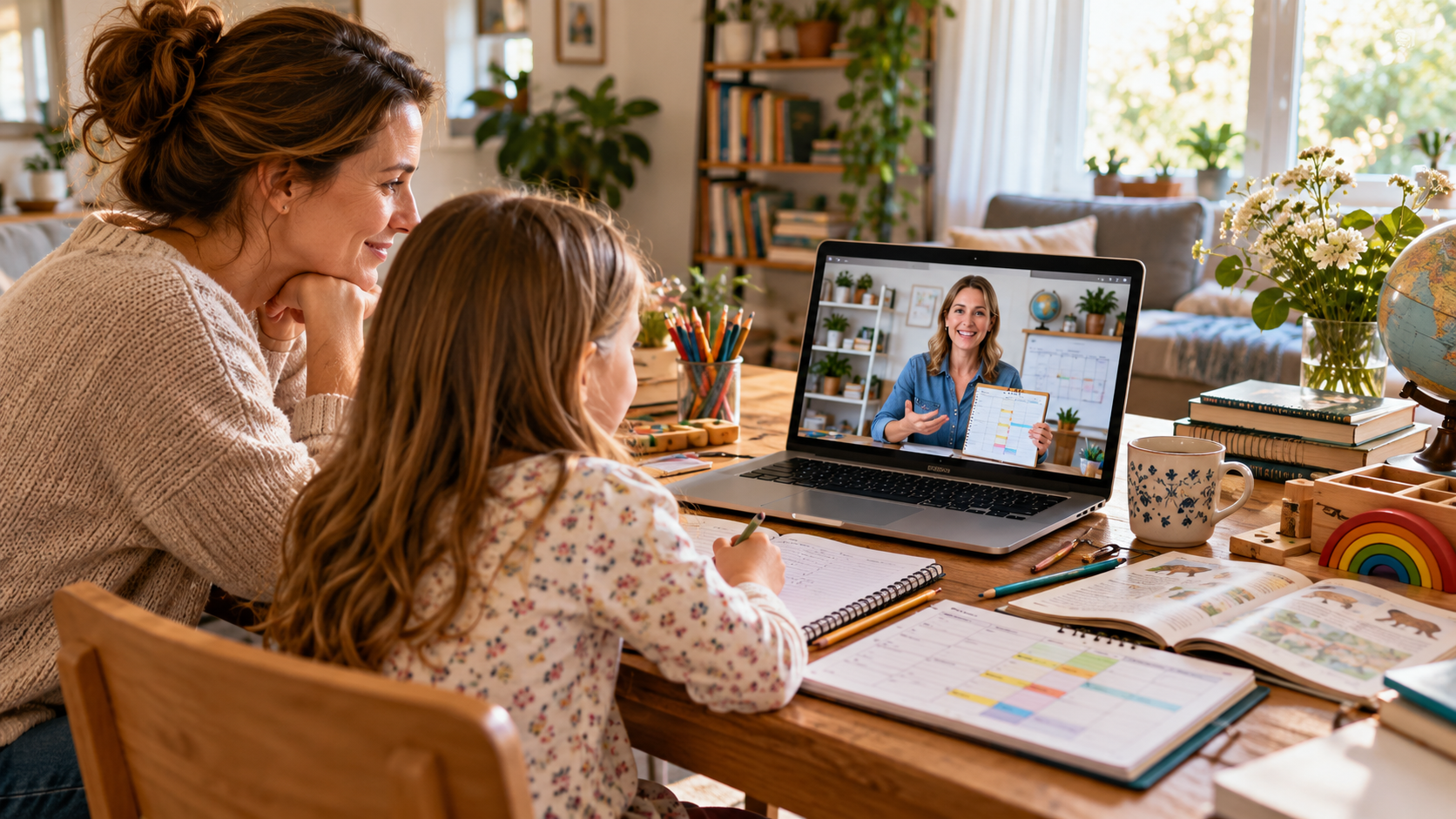
A parent can spend an entire evening watching beautiful homeschool rooms, elaborate lesson plans and cheerful “day in the life” videos—then wake up still wondering what to teach on Monday. The internet offers plenty of inspiration. What beginners need is a way to turn that inspiration into an educational plan.
The best YouTube channels for learning how to homeschool are not necessarily the channels with the biggest audiences. They are the ones that help parents understand approaches to education, choose suitable resources, build a realistic routine, support their children and notice whether learning is actually happening. For a useful starting mix, try Brave Writer for relationships and writing, Homeschool Together for secular curriculum discussions, Simply Charlotte Mason for literature-rich learning and The Good and the Beautiful for step-by-step curriculum demonstrations.
Below are nine useful channels or video resources, chosen for different family needs rather than ranked by subscriber count. The emphasis is on helping adults learn how to homeschool, not merely collecting videos that children can watch.
Before subscribing: what do you actually need to learn?
Homeschooling is not a single teaching method. A family might prefer structured lessons, Charlotte Mason practices, interest-led projects, a secular eclectic program, Christian curriculum, online classes or a combination. Those approaches have different assumptions about scheduling, materials, assessment and the role of the adult.
Begin by identifying the problem you want to solve. Are you deciding whether to homeschool? Choosing a curriculum? Organizing several children? Struggling with writing lessons? Wondering how to encourage independence? One focused answer is worth more than twenty unrelated videos.
There is also a non-negotiable first step. Check the legal requirements where your child lives before withdrawing from school or choosing a program. In the United States, the rules differ by state and can include notification, required subjects, evaluations or recordkeeping. HSLDA's state-by-state legal guide is one place to begin, but confirm current requirements with the relevant state or local education authority. A YouTube personality's experience in another location is not legal guidance for your family.
The 9 best YouTube channels to learn how to homeschool
1. Brave Writer — best for a relationship-centered approach
Watch: Brave Writer on YouTube
Best for: Parents who want practical encouragement, stronger writing instruction and a less adversarial learning atmosphere.
Julie Bogart, founder of Brave Writer, approaches homeschool education through language, family relationships and meaningful experiences. The videos and broadcasts are particularly helpful for parents who feel trapped between enforcing every assignment and letting learning become completely unstructured.
Start with a video on the morning routine, then look for discussions of freewriting, reading aloud and conversations about books. Rather than treating every written sentence as a test, a parent can help a child gather ideas, speak them aloud, write a rough draft and revise one aspect at a time.
Try this at home: After a shared reading session, ask your child to tell you the most surprising idea. Write down their answer, then invite them to add one sentence of their own. Over several weeks, gradually move responsibility for planning and revising the writing to the child.
Keep in mind: Brave Writer also sells educational materials. Its relationship-centered philosophy is a perspective, not a replacement for deliberate instruction or evidence that every child will progress with the same activities.
2. Homeschool Together — best for secular beginners and curriculum decisions
Watch: Homeschool Together on YouTube
Best for: Families looking for secular homeschooling conversations, resource reviews and ideas for younger learners.
Arial and Matthew Buza discuss how to navigate homeschooling without adopting a religious curriculum framework. Their approach includes gameschooling, resource selection and family decision-making. That makes the channel especially useful to parents who discover that a popular recommendation does not match their values or the subjects they want to teach.
One of the most useful habits you can learn here is to separate a curriculum's marketing from your child's needs. A beautifully packaged program is not automatically the right match for a child who needs more explicit reading instruction, greater mathematical challenge or a different pace.
Try this at home: Before watching a curriculum review, write three selection criteria: the skill your child needs, the format they can manage and the amount you can spend. After the video, score the resource against those criteria instead of buying it because the reviewer enjoys using it.
Keep in mind: Reviews reflect a family's particular experience. Check samples, prerequisite skills, costs and the publisher's current product information.
3. Simply Charlotte Mason — best for literature, nature and thoughtful routines
Watch: Simply Charlotte Mason on YouTube
Best for: Parents interested in short lessons, living books, narration, nature study and shared family learning.
Simply Charlotte Mason introduces the educational approach associated with Charlotte Mason. Its videos explain practical methods rather than assuming viewers already understand terms such as narration or living books.
The channel is useful for families who want daily structure without turning the kitchen table into a miniature conventional classroom. Parents can learn how a reading, a nature observation and a conversation each serve a clear learning purpose.
Try this at home: Read a short passage together. Close the book, ask your child to explain it in their own words, and listen before offering corrections. Later, invite them to draw or write one detail. The aim is attentive reading and recall, not memorizing your preferred phrasing.
Keep in mind: This is one educational tradition among several. Some families will want more direct instruction, additional practice or a different mix of texts and subjects. The organization also sells its own curriculum.
4. SEA Homeschoolers — best for secular, eclectic and academically intentional planning
Watch: SEA Homeschoolers: What Is Modern Secular Homeschooling?
Best for: Parents comparing educational philosophies and seeking a secular community with an academic focus.
SEA stands for Secular, Eclectic, Academic. The organization offers parent-oriented discussions, educational resources and video content about designing an individualized course of study. Its perspective is especially helpful if the phrase child-led learning appeals to you but you also want to protect time for foundational skills.
Here is the distinction worth learning: following a child's curiosity and checking progress are compatible. An interest in dinosaurs can inspire reading, measurement, geography and scientific questioning. It does not automatically guarantee that all essential reading or mathematics skills have been learned.
Try this at home: Choose a topic your child cares about. List one knowledge goal, one skill goal and one small project. At the end of the week, ask the child to explain or demonstrate what changed in their understanding.
Keep in mind: Eclectic learning is flexible, but flexibility requires decisions. Parents still need a progression for core subjects and a way to spot gaps.
5. Homeschool On — best for planning and realistic family life
Watch: Homeschool On on YouTube
Best for: Parents interested in organization, curriculum discussions, daily routines and the practical side of running a homeschool.
Rebecca Spooner's Homeschool On material covers planning, family life and curriculum. She is also associated with Gather 'Round Homeschool, so her videos can help parents understand both everyday logistics and family-style teaching.
This channel is useful when you have purchased the books but the day still falls apart. The lesson is not that every family needs the same timetable. It is that a routine should be built around attention, energy, responsibilities and realistic transitions.
Try this at home: Replace an elaborate hourly timetable with four dependable anchors: a short planning conversation, focused work, a break or outdoor activity, and a closing reflection. Keep the sequence recognizable while allowing individual sessions to vary.
Keep in mind: Some content is connected to a specific curriculum and a faith-informed perspective. View planning advice separately from product recommendations.
6. The Waldock Way — best for interest-led projects and joyful exploration
Watch: The Waldock Way on YouTube
Best for: Parents who want unit studies, games, literature and experiences linked to children's interests.
Jessica Waldock shares interest-led homeschooling ideas and themed resources. This channel is particularly useful when lessons feel disconnected from the child's curiosity. A topic such as space, a national park or a favorite book can become a doorway to several disciplines.
The strongest lesson is not “make every day entertaining.” It is start with a genuine question and design an activity in which the child must think. Collecting supplies, decorating a notebook or watching a themed video may be enjoyable; they become stronger learning experiences when they require explanation, comparison, calculation or creation.
Try this at home: Let your child choose a place they want to explore. Ask them to locate it on a map, estimate the travel distance, read about its environment and present a short visitor's guide.
Keep in mind: Project-based materials may need to be supplemented with systematic instruction in foundational literacy and mathematics.
7. Pam Barnhill / Homeschool Better Together — best for teaching multiple ages
Watch: Pam Barnhill on YouTube
Best for: Parents teaching siblings at different levels who need a manageable family routine.
Pam Barnhill's Homeschool Better Together approach focuses on shared learning experiences, morning time and family-style planning. For a household with a young reader and an older student, this solves an immediate practical problem: one adult cannot give a separate lecture to every child at the same time.
The transferable idea is to share the introduction and differentiate the work. Everyone might listen to the same historical story; the youngest draws the setting, a middle-grade student writes a sequence of events, and a teenager evaluates a source.
Try this at home: Select a shared read-aloud for the week. Plan one family discussion and one task per child at an appropriate level. Keep mathematics and targeted reading instruction individualized where needed.
Keep in mind: A common family lesson is efficient, but it does not remove the need for age-appropriate instruction and individual feedback.
8. The Good and the Beautiful — best for seeing a structured curriculum in action
Watch: The Good and the Beautiful on YouTube
Best for: Beginners who want to see examples of lesson planning, course materials and teaching more than one child.
The Good and the Beautiful publishes videos showing how its curriculum can be organized and taught. Its getting-started demonstration walks viewers through family-style subjects and individual work. Watching an actual curriculum walkthrough can answer questions that abstract educational debates cannot: What does a lesson look like? Which materials are needed? How much preparation is involved?
Try this at home: Watch a lesson-planning demonstration, then design your own simple lesson using the same visible steps: objective, explanation, guided practice, independent attempt and a quick check for understanding. You do not have to buy the same materials to learn from that sequence.
Keep in mind: The company describes its offering as Christian homeschool curriculum. Parents seeking secular materials should examine the content and worldview before choosing a course. Its videos also promote its products.
9. Homeschool Pop — best for learning how to use video with a child
Watch: Homeschool Pop on YouTube
Best for: Elementary-age learners who benefit from concise visual introductions, followed by discussion and practice.
This is the deliberate exception to the parent-training channels above. Homeschool Pop is primarily an educational channel for children, not a course that teaches parents to homeschool. It earns a place here because it can demonstrate a vital parent skill: using YouTube as a supplement rather than as the teacher.
A short geography or science lesson can introduce vocabulary, trigger a question and prepare a child for hands-on work. But video engagement is not the same thing as understanding.
Try this at home: Before playing a video, ask one question. Pause once for the child to predict or explain. Afterwards, ask them to draw a diagram, give an example or solve a related problem without the screen. That final step tells you more than whether they seemed interested.
Keep in mind: Preview videos, use parent-controlled playlists and avoid treating autoplay recommendations as a curriculum.
How to choose the right channel for your family
The question is not which creator has the most attractive homeschool day. It is which resource helps you make your next good educational decision.
For a first-time parent seeking clarity, start with Homeschool Together or The Good and the Beautiful, depending on the kind of curriculum you want to explore. For a literature-rich philosophy, try Simply Charlotte Mason. For writing anxiety and family relationships, begin with Brave Writer. For secular academic planning, use SEA Homeschoolers. For project learning, explore The Waldock Way. For multiple ages, begin with Pam Barnhill. For routine and organization, watch Homeschool On.
Notice the limits of your chosen perspective. A curriculum company may be excellent at explaining its own materials yet offer fewer examples of alternative programs. A lifestyle creator may model an encouraging home but not explain how to assess reading progress. A secular family might not share a religious publisher's assumptions, and a family using a faith-based program may not want a fully secular curriculum.
You do not need to resolve those differences by finding one perfect channel. Subscribe to one method-focused channel, one practical planning channel and one perspective that challenges your assumptions. Then act on what you learn.
The parent-as-learning-coach approach: five questions after every lesson
There is an important difference between presenting information and helping a child learn to use it independently. In homeschooling, a parent must sometimes instruct directly, sometimes model a skill, and sometimes step away so that the child can attempt it.
A useful reflection takes just a few minutes:
What was the goal? Name one specific skill, understanding or question.
What did my child actually do? Watching, listening, discussing, solving and explaining are not interchangeable.
What could my child do without me? This helps distinguish assisted performance from growing mastery.
Where did learning get stuck? Was the difficulty about missing knowledge, confusing instructions, attention, fatigue or motivation?
What is the smallest helpful next step? Offer a hint, a model, another example or a break rather than automatically taking over.
Consider a child who watches an engaging lesson about fractions. The parent asks the child to explain one-half and one-quarter using pieces of fruit. The child can repeat the words but cannot compare the amounts. That is useful information, not a reason for blame. The next activity might involve cutting equal pieces and comparing them, followed by a new problem the child can solve alone.
This focus on explanation, practice, feedback and gradually increasing independence is central to the educational approach promoted by Learning Coach. Parents interested in strengthening the parent-as-learning-coach role can explore the Learning Coach training pathway. Review the current program details and application conditions before making any enrollment decision.
For deeper reading on the learning process, How the Brain Learns by Solving Problems offers a complementary direction for parents who want learning activities to go beyond passive consumption. When emotions interfere with participation, The Learner's Emotional System addresses the relationship between emotional experience and learning.
A 30-day plan to learn homeschooling from YouTube
Watching everything at once usually produces more uncertainty, not more confidence. Use a month to learn, test and refine.
Week 1: Define the legal and educational starting point
Check local requirements, identify your child's current schooling situation and write down your family's priorities. Watch two beginner-oriented videos from different perspectives. Ask: Do we want a structured curriculum, an eclectic program or a hybrid? What support might we need from tutors, co-ops or specialists?
Create a one-page plan with three academic priorities, available weekly time and a realistic budget. If your child has already attended school, gather recent work samples and information about strengths and difficulties.
Week 2: Test a simple daily rhythm
Watch one planning video from Homeschool On or Pam Barnhill. Build a short routine with a beginning, two or three focused learning blocks, breaks and time for movement or reading. Adapt the length to your child's age and stamina.
Do not redesign the schedule every evening. Give the routine several days, then ask which transition caused difficulty and which part was surprisingly smooth. Keep records if required by your jurisdiction.
Week 3: Explore two teaching approaches
Try a read-aloud and narration activity inspired by Simply Charlotte Mason, and a writing conversation inspired by Brave Writer. Alternatively, pair a structured curriculum sample with a project inspired by The Waldock Way.
Collect a small sample of the child's work from each approach. Compare not only enjoyment but also what the child can explain or apply afterwards. Use the results to adjust your mix rather than deciding that an entire philosophy has succeeded or failed after one lesson.
Week 4: Review learning and build support
Choose one reading, writing or mathematics skill to check through an independent task. Ask the child what feels easier and what remains confusing. Update your plan for the next month.
Arrange opportunities to learn with other people: a library activity, sports group, science club, cooperative class, local community project or regular contact with peers. Homeschooling can be personalized, but children still need relationships and experience collaborating beyond the household.
Finish the month with a brief portfolio: a few work samples, a reading list, a project or photo log, and notes about next steps. Follow any formal assessment and recordkeeping rules that apply where you live.
Mistakes to avoid when learning homeschooling through YouTube
Mistake 1: Copying another family's entire routine. A creator's home, income, children, values and support network may be very different from yours. Borrow a principle rather than reproducing a schedule.
Mistake 2: Confusing curriculum reviews with impartial evaluations. Many creators have products, affiliate relationships or strong philosophical preferences. Ask what the recommendation is based on and what the alternatives are.
Mistake 3: Assuming a happy video proves educational progress. Engagement is valuable, but mastery needs evidence. Ask for explanations, independent examples and periodic demonstrations of learning.
Mistake 4: Treating all learning difficulties as motivation problems. A child may need clearer teaching, more practice, a different approach or professional educational assessment. YouTube advice cannot diagnose disabilities or replace appropriate support.
Mistake 5: Overlooking the child's social world. Friendships, physical activity, collaboration and exposure to different adults should be intentionally included in a homeschool plan.
Mistake 6: Ignoring recordkeeping until the end of the year. Legal obligations vary. Even where records are not required, a modest portfolio helps parents notice progress and plan what comes next.
Frequently asked questions
Can I learn how to homeschool for free on YouTube?
You can learn a great deal about methods, routines, curriculum choices and activities from free videos. However, video advice alone does not provide legal compliance, individualized evaluation or every subject a child may need. Combine free learning with official requirements, appropriate instructional resources and feedback on your child's progress.
Which YouTube channel is best for someone completely new to homeschooling?
For understanding a structured curriculum, begin with The Good and the Beautiful. For a secular family's perspective, try Homeschool Together. For a broader philosophy of the parent-child learning relationship, add Brave Writer. The best first channel depends on the question you are trying to answer.
Do I need a teaching degree to homeschool my child?
Requirements for parent qualifications depend on the jurisdiction and the legal homeschooling pathway. Do not assume another family's answer applies to you. Check your education authority's current rules. Regardless of legal qualifications, parents benefit from learning instructional basics, seeking help in unfamiliar subjects and reviewing progress.
Can I homeschool several children of different ages together?
Yes, some subjects such as literature discussions, art appreciation, projects and nature study can be shared. Reading instruction, mathematical practice and feedback often need to be individualized. Pam Barnhill and Simply Charlotte Mason provide examples of family-style approaches, but the appropriate balance depends on each child's needs.
Is a YouTube-based homeschool enough?
Not by itself. Educational videos can help introduce concepts, but a full educational plan needs suitable subject coverage, meaningful practice, opportunities for feedback, progress checks, social participation and compliance with local rules. Use videos deliberately, not as a substitute for all the other elements of education.
Final thought: learn to guide learning, not to imitate a classroom
The real value of homeschooling channels is not a perfect shelf arrangement or an endlessly productive morning. It is the chance to observe different ways adults help children learn—and to decide thoughtfully what fits your own family.
Start with a small selection of trustworthy channels, try one idea at a time and look for evidence of independence. A successful learning day is not simply a day when every page was completed. It is a day when your child understands something more clearly, practices a meaningful skill and takes one further step toward directing their own learning.
Resources and references
HSLDA — Homeschool Laws by State, for an initial overview of US requirements; confirm the current rules with official authorities.
Brave Writer — Broadcasts, official description of videos and parent-learning topics.
Simply Charlotte Mason — Home Education Resources, official approach and instructional resources.
Homeschool Together — Secular Resources, official channel and resource directory.
SEA Homeschoolers — Homeschooling 101, secular parent-support resource.
The Waldock Way, official channel link and interest-led resources.
Homeschool Better Together, family-style learning and planning.
The Good and the Beautiful — How to Start Homeschooling, publisher's planning and curriculum materials.
