
GESS Dubai 2026: What Educators Should Watch Beyond the EdTech Hype
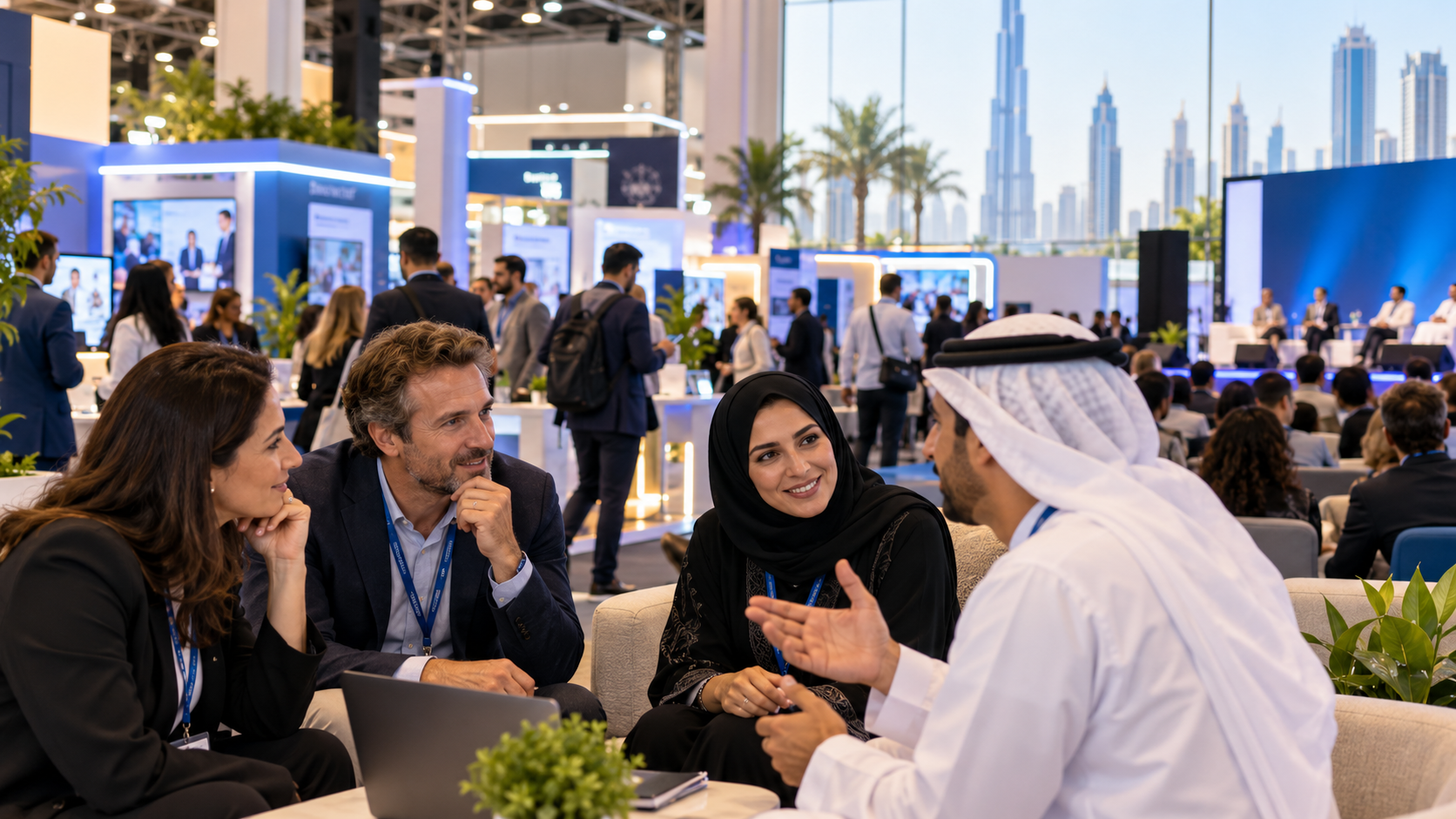
On a busy exhibition floor, it is easy to mistake excitement for educational progress. A new AI assistant produces a lesson plan in seconds. An immersive screen holds a visitor's attention. A school leader hears an inspiring presentation about the classroom of tomorrow. Each moment is promising, but the question that matters comes afterwards: what will students be better able to understand, practise or do independently because of it?
That is the question educators should bring to GESS Dubai 2026, the international education exhibition and conference returning to Dubai on 10–12 November 2026. The event creates opportunities to encounter educational technology, practical workshops, school leadership ideas and professionals from across the region. Yet its greatest value may not be a device, software licence or keynote. It may be the chance to rethink what schools choose to measure as meaningful learning.
This guide covers confirmed dates and venue information, the published conference themes, practical priorities for visitors, and a way to convert an impressive three-day experience into better classroom decisions. It is a pre-event guide, prepared on 21 October 2026—not a report claiming to know what attendees will say or achieve in November.
GESS Dubai 2026 at a glance: dates, location and visitor information
GESS Dubai describes itself as a major education exhibition and conference serving the Middle East and an international audience. According to its official venue information, the 2026 edition will take place in the Sheikh Saeed Halls at Dubai World Trade Centre, from Tuesday 10 November through Thursday 12 November.
The published opening hours are 10:00–18:00 on Tuesday and Wednesday, and 10:00–17:00 on Thursday. The venue is accessible via the Dubai World Trade Centre metro station. International visitors should check travel and entry requirements independently rather than assume an exhibition pass covers visa arrangements.
On its visitor page, the organiser currently offers a free visitor pass and describes an audience that includes principals, school owners, teachers, consultants, government representatives and procurement professionals. Registration conditions and the conference schedule may change, so revisit the official pages shortly before travelling.
There is a meaningful scale behind the event. The GESS Dubai 2025 post-show report records more than 7,500 education professionals from 94 countries, over 300 exhibiting brands, and more than 250 CPD-accredited sessions for that previous edition. These are 2025 results, not attendance projections or promised figures for 2026. They indicate the breadth of perspectives visitors may encounter without guaranteeing a particular turnout this year.
What will be on the GESS Dubai 2026 conference programme?
The 2026 conference programme outlines a mixture of presentations, demonstrations, workshops and professional conversations. Its published strands include Leaders in Education, GESS Talks Live Stage, Inclusion, Wellbeing & Sustainability, EdTech in Action, Design & Build, Early Years, product showcases and education investment discussions.
This combination matters. Digital tools are only one part of school improvement. Children also need safe relationships, meaningful challenges, feedback, belonging and opportunities to become active participants in learning. A visitor who attends only product demonstrations may miss sessions about leadership, early childhood or school culture that are equally relevant to their institution.
The organiser states that attending at least three hours of conference content can qualify visitors for a CPD-accredited certificate. That is the organiser's stated criterion; attendees should verify the current tracking and certification arrangements on site. Professional development is most valuable when a certificate represents learning that the teacher subsequently translates into practice.
The published Day 1 agenda includes topics such as The Dubai School Leader in 2030, Leading Digital Transformation: Technology as a Tool, Not a Takeover, and Skills Passport: Shifting School MIS Data from Institutional Analytics to Student Agency. These titles are particularly revealing: the conversation is not just about purchasing more technology, but about leadership, data, professional judgement and learner ownership.
Why GESS Dubai matters to teachers and school leaders in the Gulf
The education sector across the UAE and the wider Gulf operates within a distinctive landscape: government systems, private school groups, international curricula, multilingual classrooms and ambitious digital strategies coexist. An innovation that works for one type of school may need considerable adaptation elsewhere.
This makes an education exhibition useful when it helps professionals ask better questions across institutional boundaries. How do we support a student learning in an additional language? How do we help a teacher with a demanding timetable adopt a tool without increasing workload? How do we evaluate accessibility in a real classroom rather than during an idealised demonstration? How do we maintain sound assessment when AI can produce polished work?
The UAE's professional development ambitions provide additional context. An initiative documented by UNESCO's SDG 4 Knowledge Hub describes a national educator competency framework and AI-enabled assessment effort. This is a separately documented national initiative, not a GESS programme or endorsement of any exhibitor. It illustrates the wider interest in linking technological systems with accountable professional growth.
For school leaders, a successful visit therefore has two dimensions. The first is discovery: identifying promising resources and meeting capable partners. The second is discernment: deciding which ideas fit the learners, staff capacity, curriculum and safeguards of the school. Discovery without discernment can create an expensive collection of disconnected pilots.
Five education trends worth examining at GESS Dubai 2026
1. Artificial intelligence that supports thinking rather than replaces it
AI-assisted feedback, content generation and adaptive practice are likely to attract substantial attention within the EdTech in Action stream. The important distinction is between making a task faster and helping a student learn to perform it.
Imagine a pupil using an AI tutor to solve an algebra problem. The software might show three elegant steps. The learner may still be unable to explain why the first transformation is valid. A more educationally useful design would ask the pupil to predict the next step, justify a choice, identify an error or solve a new problem without assistance.
Ask providers what happens when the student answers incorrectly, how the system adapts, and whether teachers can see evidence of independent understanding. A confident presentation is not a substitute for comparative evidence of learning.
2. Teacher development and human judgement
Professional learning must extend beyond technical orientation. Teachers need to decide when an AI suggestion is inaccurate, inappropriate for a learner, or at odds with the curriculum. They also need to know when a student needs direct instruction, practice, dialogue or encouragement instead of another digital intervention.
UNESCO's AI Competency Framework for Teachers specifies fifteen competencies across five dimensions, including a human-centred mindset, AI ethics, AI pedagogy and professional learning. The framework offers a useful lens for scrutinising vendor promises: does the proposed solution strengthen teachers' capabilities or quietly transfer important decisions away from them?
A school should leave a professional development session able to identify a change in teaching practice—not merely a list of applications to try.
3. Inclusion, wellbeing and accessibility as design criteria
Inclusion is often treated as a separate department. Yet it should shape everyday choices about interfaces, language, reading demands, sensory load and assessment.
A product may appear engaging to a confident, fluent reader while being confusing for a learner with additional language needs. An immersive experience may captivate one child but overwhelm another. An automated feedback system may provide technically correct advice that lacks the sensitivity of a human conversation.
The programme's wellbeing and inclusion themes invite visitors to ask about safeguarding, accessibility testing, user choice and alternative pathways. They also remind leaders that student wellbeing cannot be reduced to a dashboard score. Educational and clinical responsibilities must remain appropriately distinguished.
4. Learning through making, exploration and authentic problems
The Design & Build and Early Years strands create an opening for forms of learning that cannot be judged by screen time or automation alone. Building a model, designing an experiment, investigating a local environmental problem or presenting an argument can reveal thinking that a multiple-choice score misses.
The question is not whether hands-on learning is always superior. It is whether the activity requires the learner to plan, test, notice errors, revise and explain. A beautifully resourced classroom project can still be passive if adults make every important decision.
Look for demonstrations in which students have genuine choices and must articulate what they discovered. That is a stronger signal than visual novelty.
5. Learning analytics that give students agency
Many school systems can generate detailed dashboards. Far fewer use those numbers to help a student understand what to do next. Attendance, completion and usage data may be useful, but they do not automatically show comprehension or transfer.
One of the 2026 agenda topics explicitly connects school information systems with student agency. A productive discussion could move from “What does the dashboard say about the child?” to “How can the child interpret feedback, set a goal and evaluate progress with an adult's help?”
Good analytics should clarify decisions and make limitations visible. They should not disguise uncertain inferences as diagnoses or replace a teacher's knowledge of the learner.
How to evaluate an EdTech product before your school buys it
At a large exhibition, a salesperson often has only minutes to make an impression. Prepare a repeatable evaluation routine so that each demonstration faces the same practical questions.
Begin with the learning problem. Does your school need to improve reading comprehension, teacher feedback, mathematical reasoning, communication with families or the quality of independent practice? A product that addresses none of the school's current priorities is not urgent simply because it is innovative.
Next, define the behaviour you hope to observe. For example, “Students will explain an answer using two pieces of evidence without prompts” is more useful than “Students will be more engaged.” Engagement can support learning, but attention-grabbing screens do not prove durable understanding.
Then request credible evidence. Was the product tested with comparable ages and curricula? Was there an appropriate comparison group? How long did the observed improvement last? Can the supplier distinguish an independent evaluation from a sponsored testimonial?
Finally, examine implementation and risk. Who trains teachers? What happens when connectivity fails? Can students opt for an accessible alternative? How are children's data stored, retained and deleted? What contractual and technical steps are available if the school decides to stop?
Six questions to ask at every demonstration
- What specific learner difficulty is this intended to solve?
- What will students do without the tool after using it?
- How do teachers recognise misconceptions and override the system?
- What evidence supports the claimed benefits, and for which learners?
- What are the accessibility, safeguarding and data-protection arrangements?
- What staffing, training, integration and ongoing costs are involved?
Bring the answers back to colleagues before making a decision. The strongest supplier may be the one who explains limitations clearly and encourages a modest pilot rather than immediate full-school adoption.
A practical three-day GESS Dubai visit plan
An exhibition this size is easier to navigate with a learning agenda rather than an enormous list of booths.
Day one: investigate teaching and leadership. Start with a question your institution genuinely needs to answer. Compare sessions on school leadership, teacher learning and AI-supported education. Speak with teachers from different types of schools. End the day with three insights and one assumption you now doubt.
Day two: test solutions and ask harder questions. Visit exhibitors you identified in advance through the official directory and event information. Request hands-on demonstrations that resemble real classroom constraints: mixed attainment, limited time and students who need additional support. Meet at least one educator who already uses a comparable approach. Ask what did not work as expected.
Day three: decide what deserves a pilot. Select one or two ideas to investigate further, not ten. Clarify implementation requirements, evidence, budget and safeguarding with the relevant people. Use the final sessions to challenge your preferred option rather than search only for confirmation.
GESS offers an event app for exploring the agenda and arranging connections, but check the live 2026 access information; material on the site can refer to previous editions. Allow breaks and unplanned conversations. Meaningful contacts often begin with an honest question rather than a prepared sales pitch.
A useful personal exercise is to write down a response to this prompt after every session: “If we implemented this idea next term, what would a learner do differently?” If there is no plausible answer, the idea may still be interesting, but it is not yet an action plan.
The overlooked challenge: turning innovation into learner independence
What happens when a school buys a sophisticated learning platform but students still cannot start a task, choose a strategy or recover from an error without constant adult direction?
This is not primarily a software question. It is a question about learner autonomy: the gradual development of knowledge, confidence, metacognition and self-regulation that lets someone take increasing responsibility for learning.
An educator who adopts a coaching posture might respond differently to a struggling pupil. Instead of immediately giving the answer, they could ask: “What do you understand already?” “Where did the process break down?” “What is one next step you could test?” These questions complement—not replace—explicit teaching, modelling and feedback.
One practical approach is to introduce a tool with a deliberate transfer-of-responsibility plan. In the first lesson, the teacher demonstrates the strategy. In the next, the student uses prompts to practise. Later, prompts are reduced; the student explains the strategy and attempts a new problem independently. The final check is not the attractiveness of the digital output but the learner's ability to transfer the underlying skill.
This distinction also matters with AI. A student who produces excellent essays with a generator may not yet be able to plan an argument, evaluate a source or revise a paragraph unaided. The aim is not to ban useful tools. It is to preserve opportunities to think before assistance, use assistance critically and demonstrate understanding afterwards.
UNESCO's guidance on generative AI in education and research emphasises human-centred design, privacy and age-appropriate safeguards. Its principles are particularly relevant when conference exhibitors make broad claims about personalisation and automation.
A 30-day follow-up plan after GESS Dubai
The most useful outcome from an education exhibition is a disciplined change in practice. Without one, a conference can become a collection of brochures and enthusiastic notes.
Week one — define the problem and baseline. Meet with the relevant teachers and, when appropriate, students. Choose a small, observable difficulty: for instance, Year 7 learners depend on hints to explain evidence in science. Gather a baseline through ordinary classroom work. Clarify privacy and consent requirements before collecting or sharing pupil data.
Week two — pilot one change. Try a new routine, resource or feedback method with a manageable group. Specify what the teacher will do differently and what students will be expected to do. Record implementation problems as carefully as successful moments.
Week three — seek disconfirming evidence. Did the approach help all learners equally? Did it increase workload? Are results attributable to extra adult attention rather than the product? Can students apply the skill in a different context? Compare work from before and after the pilot, while recognising that a small school pilot cannot establish broad causal effectiveness.
Week four — review and decide. Invite teachers and learners to explain the experience. Continue, adapt or stop. Document the decision, unresolved questions and any conditions for wider use. Share the lesson with colleagues who could benefit, including colleagues who could not attend Dubai.
This cycle makes the visit more valuable because it converts professional inspiration into observable learning decisions. Its discipline also protects schools from treating innovation as an annual purchasing ritual.
Where Learning Coach fits into the conversation
Learning Coach advocates an important shift: from an exclusive focus on delivering content to a stronger focus on coaching how people learn. For teachers, that can mean combining clear instruction with more deliberate questioning, metacognitive feedback, attention to motivation and a gradual release of responsibility.
This perspective is relevant to every major theme at GESS Dubai. AI can provide information, but educators still help learners evaluate and use it. Assessment can generate scores, but a learning conversation helps students interpret them. Technology can enable practice, but human guidance remains vital when a pupil is discouraged, confused or excluded.
The aim is not to describe coaching as a cure-all or to claim it replaces subject expertise. Coaching is one contribution to stronger teaching, alongside curriculum design, leadership, accessibility and evidence-based instruction. Educators and school leaders who want to examine this professional approach can explore the Learning Coach training pathway and its current specialisations. Consult the official programme for up-to-date availability and application conditions.
For an English-language discussion of how digital tools can strengthen rather than replace independent learning, see Microsoft Education Tools: Build More Independent Learners.
GESS Dubai 2026: frequently asked questions
When is GESS Dubai 2026?
It is scheduled for 10–12 November 2026. The organiser lists 10:00–18:00 on the first two days and 10:00–17:00 on the final day. Verify the latest details on the official site before travelling.
Where will GESS Dubai 2026 take place?
At the Dubai World Trade Centre, Sheikh Saeed Halls, in the United Arab Emirates. The metro station serving the World Trade Centre is nearby.
Is it free to visit GESS Dubai?
The official visitor information offers a free visitor pass at the time of writing. Registration is separate from travel, accommodation and any additional arrangements that may apply. Check current conditions before making plans.
Is GESS Dubai only for school principals and buyers?
No. The intended audience also includes teachers, educators, consultants, policymakers and others involved in education. Different strands may be more relevant to different professional roles.
Can teachers receive a CPD certificate?
The official 2026 conference page says that attending three or more hours of conference content can qualify visitors for a CPD-accredited certificate. Confirm the current attendance-recording procedure and certificate conditions with the organiser.
What should a teacher bring back from the exhibition?
A specific problem statement, a small set of ideas supported by credible evidence, relevant professional contacts and one measurable pilot plan. These are more likely to improve classroom practice than a long inventory of exciting products.
The question to take into the exhibition hall
GESS Dubai 2026 is an opportunity to see the energy, ambition and diversity of the education sector in one place. Its conference programme offers an unusually broad entry point: technology, leadership, inclusion, early years, sustainability and professional learning.
But the enduring test of educational innovation is not how futuristic it looks. It is whether teachers become more capable of guiding learning and students become more capable of directing their own thinking.
Visit with curiosity. Ask for evidence. Listen to teachers. Make room for students' needs and voices. Above all, return with a concrete plan for learning—not simply a plan for buying.
Sources and further reading
- GESS Dubai — Official conference programme for 2026 (organiser; checked 21 October 2026).
- GESS Dubai — Venue and travel information (organiser; checked 21 October 2026).
- GESS Dubai — Why visit and visitor registration (organiser; checked 21 October 2026).
- GESS Dubai 2025 post-show report (historical event figures; accessed via BESA).
- UNESCO — AI Competency Framework for Teachers (2024).
- UNESCO — Guidance for Generative AI in Education and Research (2023).
- UNESCO SDG 4 Knowledge Hub — UAE National Educators Competency Framework and AI-Enabled Assessment Initiative.
