
Ideas to help you learn better.
Research, methods and fresh perspectives to understand learning, build autonomy and help education evolve.
Published articles

didacta Germany: How to Connect the Education Fair with Better Teaching
didacta combines an education marketplace with professional learning. Here is how school teams can connect its 2027 agenda with decisions about teaching and support.

From Curriculum Compliance to Learner Agency: The Next Challenge for New Zealand School Leaders
New Zealand's curriculum refresh is a compliance challenge and an opportunity to make learning more independent. A practical leadership framework with evidence, equity and a 90-day plan.

IFE Conference: Connecting Educational Innovation with Latin America's Learning Needs
IFE Conference brings educational research and innovation into the same conversation. Its value depends on how leaders test ideas against local learning needs.

Better Writing, Better Thinking: How New Zealand Teachers Can Develop Independent Writers
New Zealand teachers can strengthen independent writing with explicit sentence instruction, oral rehearsal, purposeful feedback, gradual release and coaching questions aligned with the 2026 English curriculum.

SXSW EDU: How a Festival Format Broadens the Education Conversation
A keynote, a workshop, a film and a peer discussion reveal different aspects of learning. This SXSW EDU preview explores how delegates can connect those experiences with a useful local decision.

ASU+GSV Summit: Where EdTech Startups, Investors and Education Leaders Meet
ASU+GSV brings different definitions of progress into one room. This analysis examines how education leaders can connect commercial promise, practical implementation and a defensible learning case.

Should New Zealand Schools Embrace AI? A Practical Guide for Teachers and Principals
A practical, evidence-informed guide for New Zealand teachers and principals on using AI without sacrificing student thinking, privacy, academic integrity or learning autonomy.

EDIX Japan: What Educational Innovation Looks Like Beyond the Device
EDIX Japan brings classroom resources and the conditions around teaching into one conversation. This analysis examines what international leaders can learn without assuming that a device—or a national example—is a complete learning model.

DIDAC India 2026: Connecting Education Technology, Teaching and Skills
DIDAC India connects educational resources, technology and skills conversations. This preview helps leaders investigate the conditions that turn an impressive demonstration into worthwhile learning.

EDUtech Australia: What Educational Innovation Must Prove
EDUtech Australia brings school, university and technology conversations together. This analysis asks what innovations must demonstrate before institutions call them progress.

NCEA in the Age of AI: How Can New Zealand Schools Assess Real Learning?
A practical New Zealand guide to NCEA assessment in the AI era, explaining NZQA authenticity, internal versus external assessment, learner evidence and the transition to new qualifications.

EDUtech Asia: Why Singapore Is a Global Hub for Educational Innovation
Singapore offers a useful setting to examine how digital infrastructure, teacher judgement and educational purpose connect. This EDUtech Asia preview helps delegates ask better questions before adopting new technology.

Getting Australian Schools AI-Ready for 2027: A Practical Leadership Checklist
A practical 12-point checklist and 90-day implementation plan for Australian principals preparing for 2027: AI governance, assessment authenticity, staff capability, privacy, inclusion and independent learning.

Rural Australia and the AI Education Opportunity: Innovation or Another Digital Divide?
Could AI improve teaching and learning in rural Australia, or deepen the digital divide? Australian data, cultural safeguards, offline access and a practical school pilot show how to put equity before hype.

Homework Without the Battles: An Australian Parent's Guide to Independent Learning
Australian parents can reduce homework conflict by clarifying school expectations, supporting the learning environment and gradually handing planning, checking and help-seeking back to children.

Why Some Australian Children Still Struggle with Reading—and What Learning Science Suggests
Australia's reading challenges have no single cause. This evidence-informed guide explains decoding, fluency, language, knowledge and intervention, with a six-week school response and helpful parent questions.
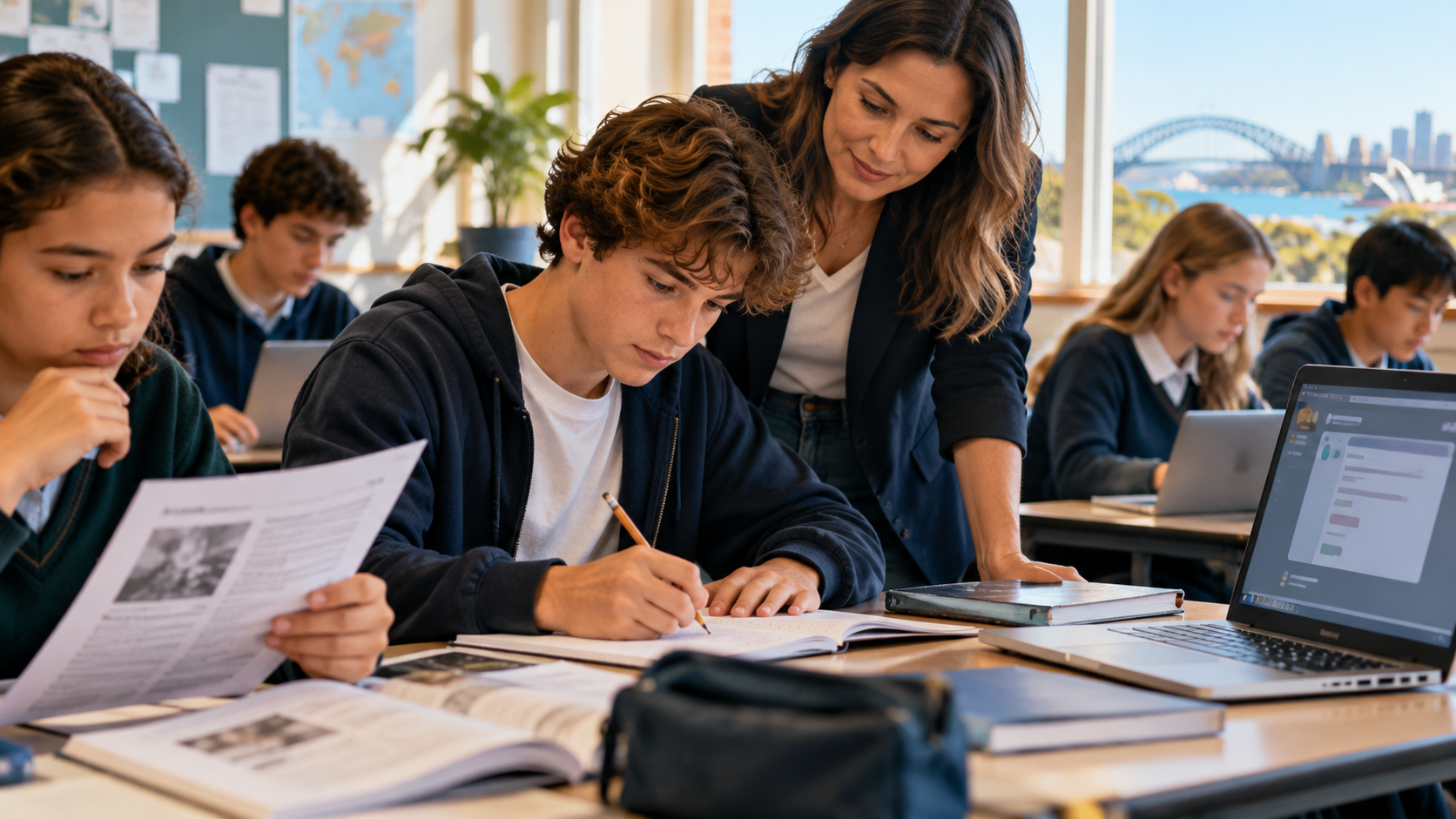
Australian Students Can Prompt AI—But Can They Still Think Independently?
Can students who prompt AI confidently still reason without it? An Australia-focused guide to independent thinking, evidence checks, curriculum-aligned tasks and purposeful AI use.

Can AI Close Canada's Rural and Remote Education Gaps Without Replacing Teachers?
AI could help remote Canadian schools expand access to resources, but it cannot replace teachers, broadband investment or community authority. A practical guide to equitable, low-bandwidth and teacher-led use.

From AI Policies to Real Learning: A Practical Roadmap for Canadian School Boards
Canadian school boards need more than an AI policy. This guide turns provincial guidance into a practical 90-day plan covering governance, procurement, privacy, classroom training and measures of independent learning.

Canadian Parents Are Tired of Homework Battles: How to Raise More Independent Learners
A Canadian parent's guide to growing self-directed learners: five abilities, a support ladder, age-appropriate expectations and productive school partnerships.